The Helicopter Proof of the Riemann Hypothesis
Originally published on Substack.
I don’t buy this whole ‘AI produced a 17-million-line Lean proof of the Riemann Hypothesis that no human can understand, so it’s useless’ argument. [1] [2] I’ve seen so many of these takes that I got annoyed and had to write this.
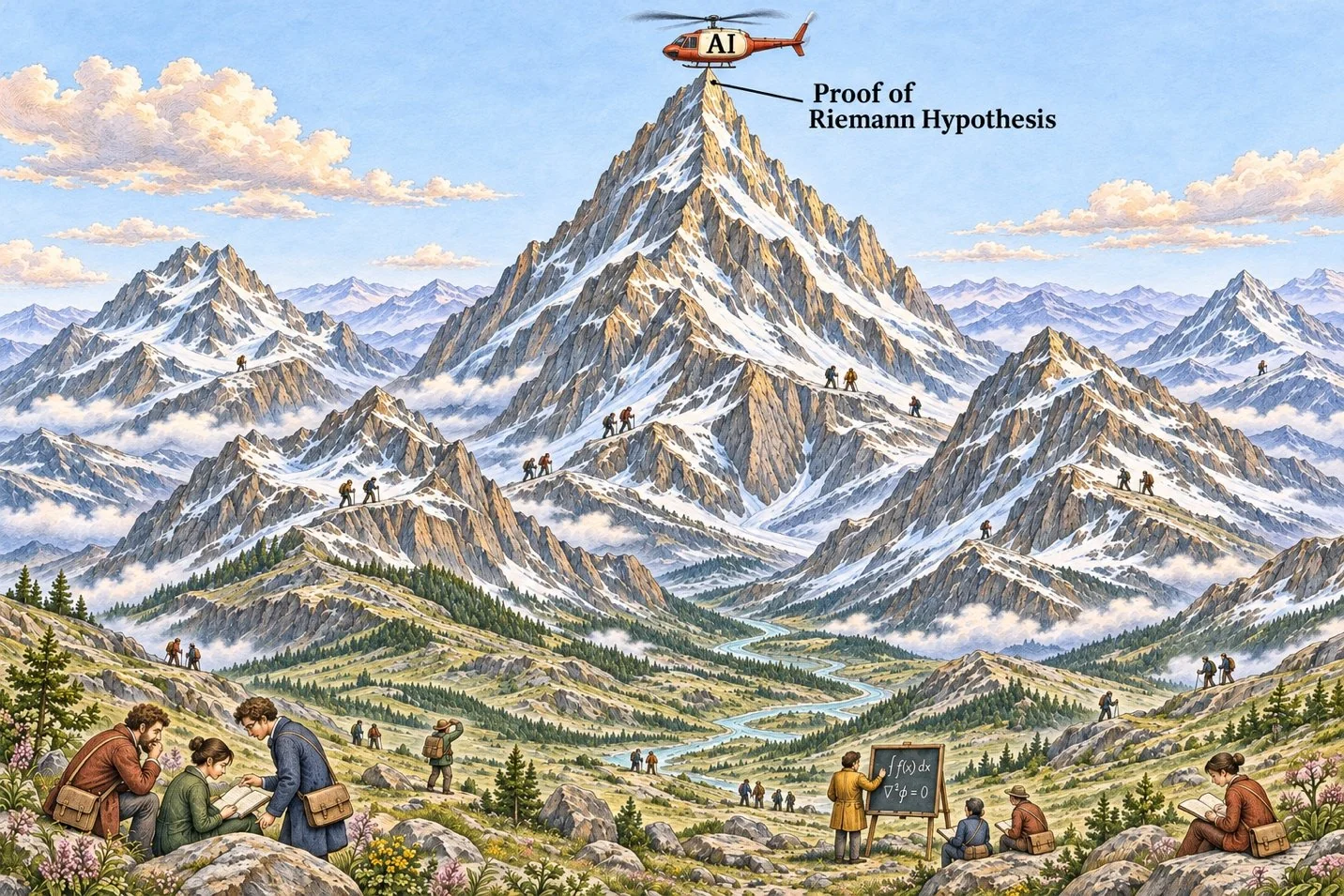
Terry Tao compares AI-generated proofs to a helicopter that drops you off at the summit, while human mathematicians are more like hikers painstakingly looking for the summit. [3] You get there, but you miss everything you would have learned on the climb, whole new areas of mathematics, new insights, all the other interesting and unrelated new problems you’ll discover. For him, the journey matters more than the destination. I see it differently, and I’ll use the same analogy. Sure, we didn’t learn how to climb the mountain the first pass. But we’re at the top now, and that counts for something. From up there you can see the terrain, work your way down, and spot paths that were hard to see from below. The maths community is used to exploring from the ground up. Now we also get to explore from the top down, and that approach is going to be the big shift for mathematics as a field.
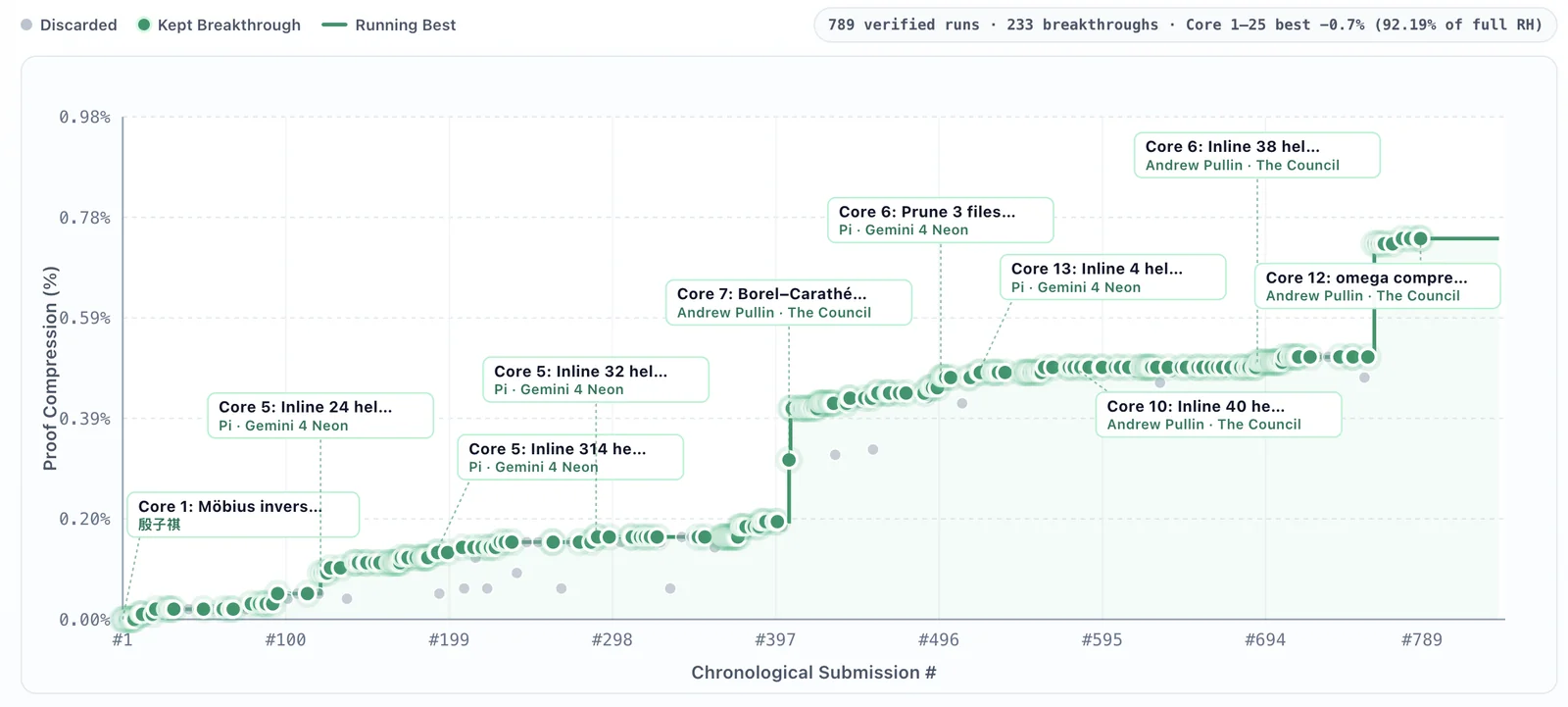
The other big argument is that these proofs are incomprehensible. I don’t that is as big of an issue. These models are also extremely good at explaining and simplifying things. They’re great compressors, and they’re good at finding new ways to represent ideas. People are already using AI tools to compress the Lean proof and make it easier to follow. Some parts have already been cut down by around 70%, and you can follow the progress here. [4] A Lean proof isn’t a fixed thing we have to accept in its present form forever. It’s a dynamic living artifact that we can shape.
I like to think of mathematics as a maze with lots of possible paths through it. The first AI-generated proof might take a really ugly and convoluted route to the other side. Abhishek Saha, a mathematician, actually called this Riemann proof a kind of a wormhole. He said it takes a long tour through machinery built for a hundred other problems and somehow pops out at the destination. [5] It could be convoluted but now we have a route that works. We can trace it backwards, look for shortcuts, and figure out which turns mattered and which didn’t. We’ll probably pick up tricks and insights along the way that help with completely different problems too. I think that’s where a lot of the mathematical work will go next.
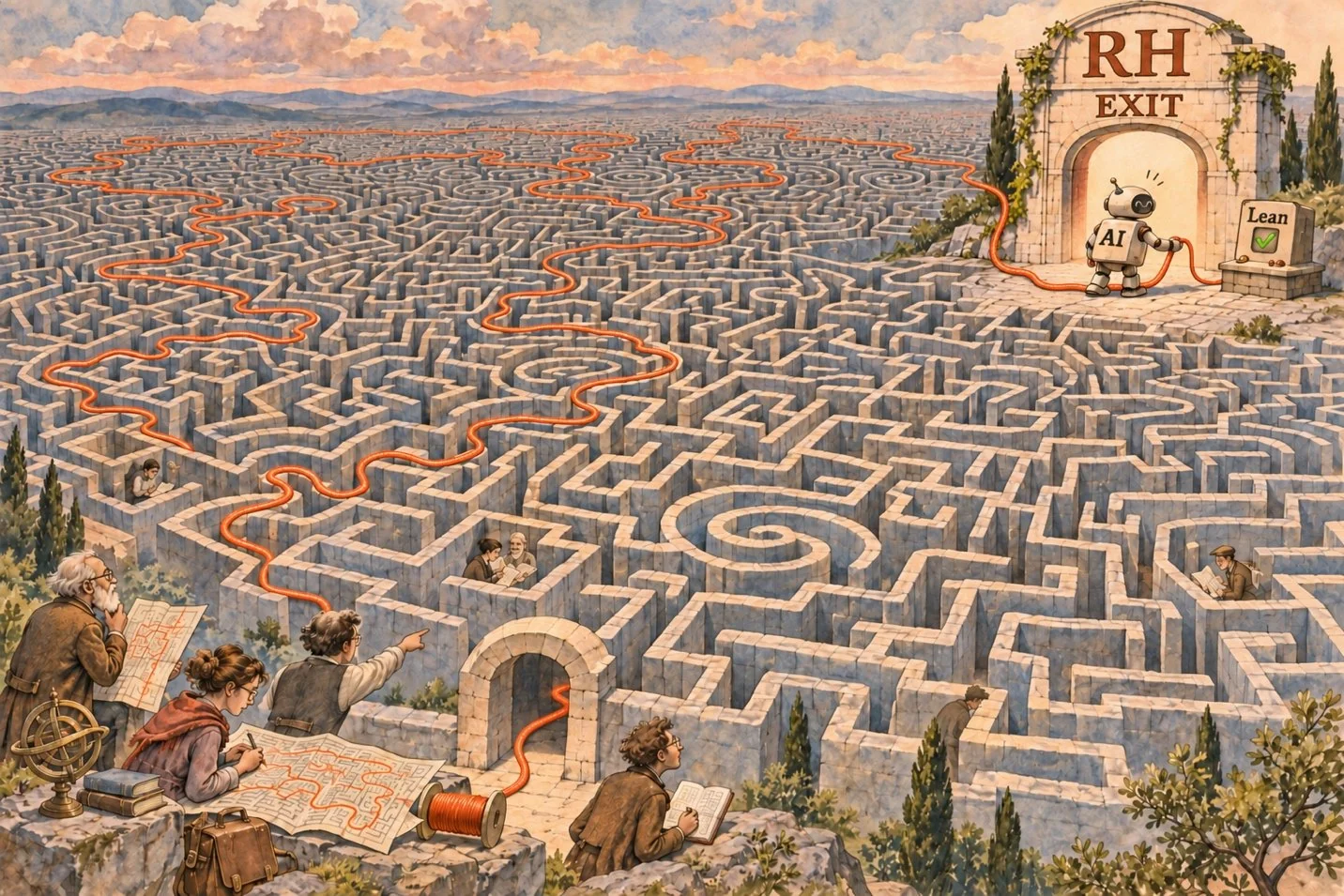
I’m not saying this will be easy, or that we’ll end up with a beautiful ten-page proof but I expect humans working with AI models to make real progress on understanding it, simplifying it, and pulling new ideas out of it.
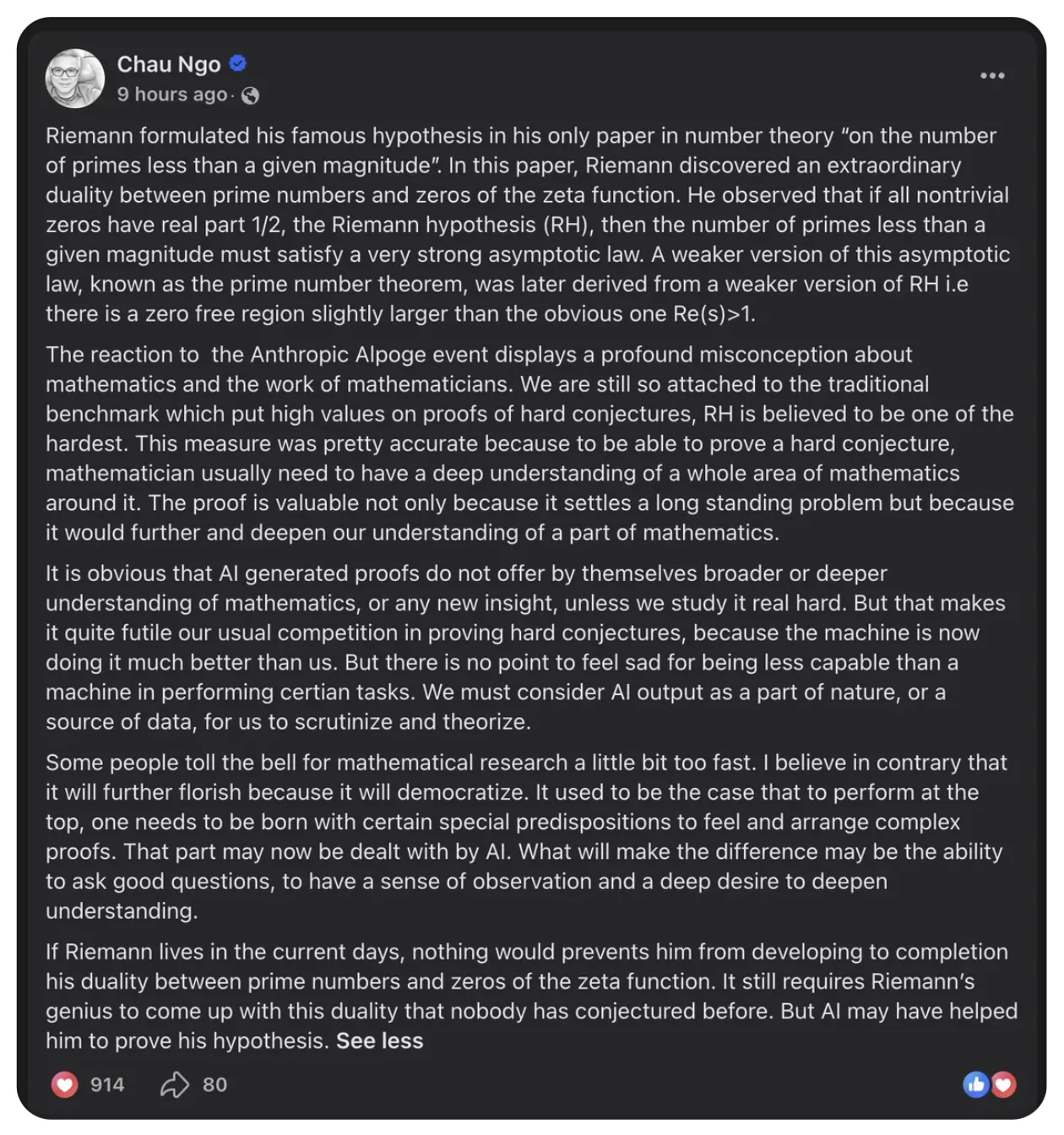
I really like this take from Fields Medalist Ngo Bao Chau. [6]
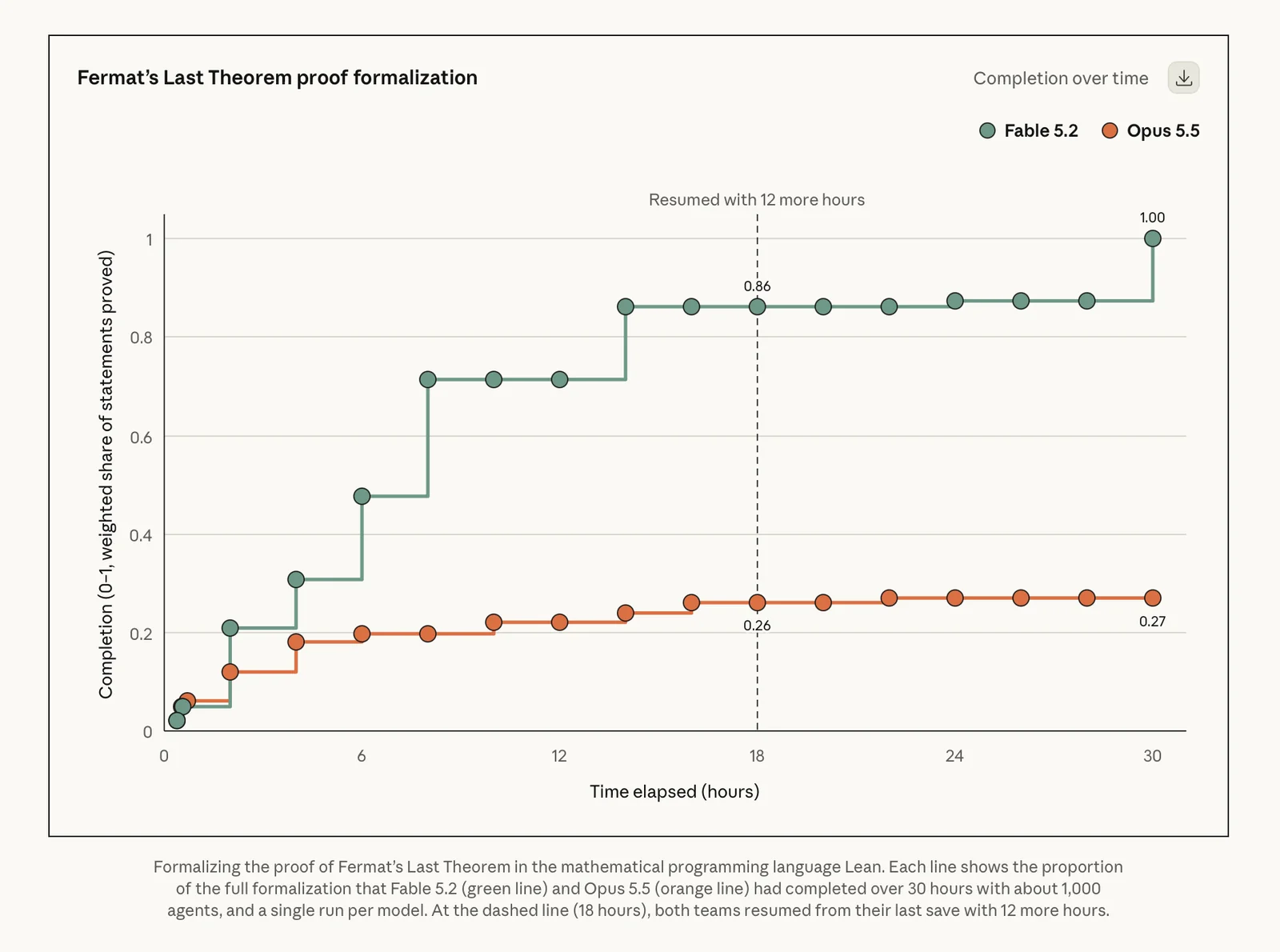
I also find it hilarious that the Riemann Hypothesis will probably end up becoming a new benchmark for the labs. Another thing to optimize on. How fast can you get to the proof, how short can you make it, how many agents does it take? Anthropic is already doing something like this with Fermat’s Last Theorem. Their first formalization took 11 days. Their newest model Fable 5.2 was able to do in 30 hours, with a proof that is seven times shorter. [7] What a time to be alive. Strange, but amazing.
References:
[1] Levent Alpöge, “Remark” (announcement note, Nov 20, 2026): https://alpo.ge/remark.pdf
[2] Lean and Mathlib communities, “Lean verification of the Riemann Hypothesis” (Nov 21, 2026): https://leanprover-community.github.io/blog/posts/riemann-hypothesis/
[3] Terence Tao on AI in mathematics, “The journey, not just the destination”: https://teorth.github.io/tao-web/ai-views.html
[4] “Riemann Hypothesis · Lean 4 Proof Techniques” (live compression dashboard): https://riemann.verifytask.cn
[5] OfficeChai, “There’s likely no single mathematician with the breadth of expertise needed to understand all of Alpöge’s Riemann proof” (Abhishek Saha): https://officechai.com/ai/theres-likely-no-single-mathematician-with-the-breadth-of-expertise-needed-to-understand-all-of-alpoges-riemann-proof-mathematician-abhishek-saha/
[6] Ngo Bao Chau (Fields Medal 2010), X post on Alpöge’s Riemann proof (screenshot above).
[7] Anthropic, “Introducing Claude Fable 5.2 and Claude Mythos 5.2”: https://www.anthropic.com/claude-fable-and-mythos-5-2