First glimpses of recursive self-improvement
1 min read
Originally published on Substack.
We may be seeing the first glimpses of recursive self-improvement (RSI), AI helping build better AI, which then helps build the next generation even faster.
I don’t think we’ve reached full RSI yet but the feedback loop is starting to show up.
Three charts that show where things may be headed:
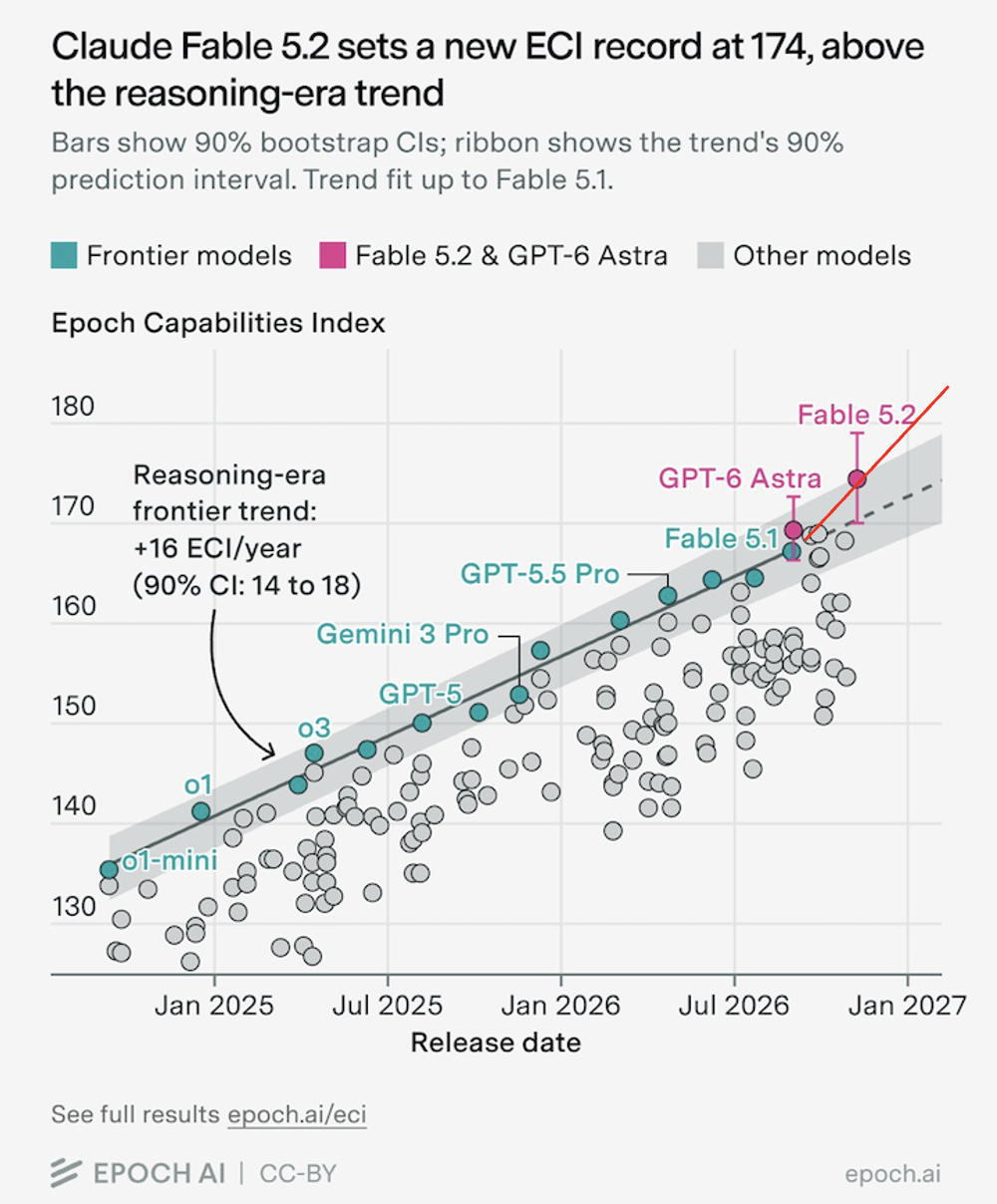
- The new frontier models are breaking the trendline. Claude Fable 5.2 is the latest jump on Epoch’s Capabilities Index. We could be seeing a steeper trajectory of model improvement but we need a few more model releases to see if it holds.
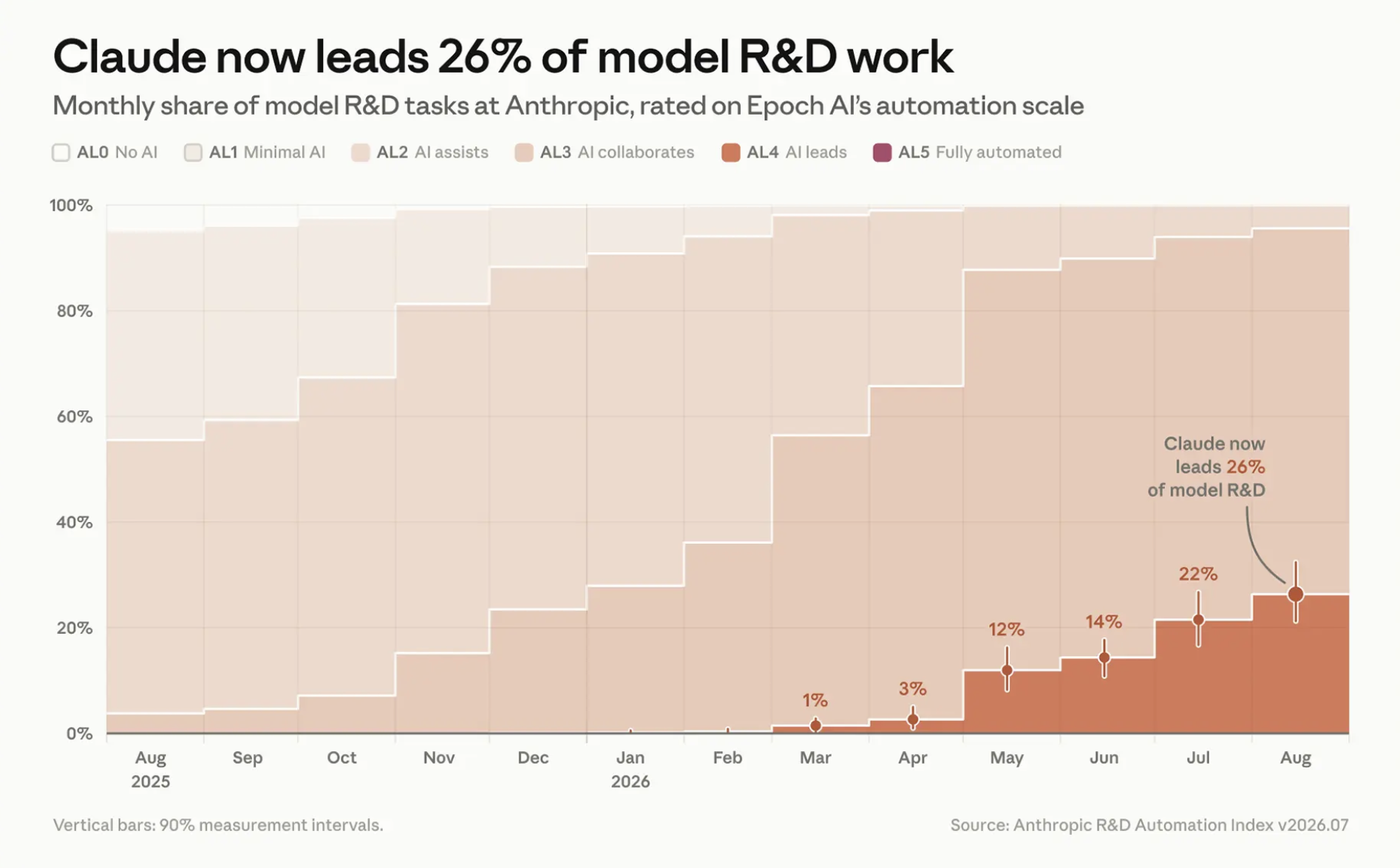
- AI is doing more of the work of building AI. In the new Anthropic report, you can see that Claude now “leads” 26% of its AI R&D work, up from under 1% in February. It still isn’t fully autonomous research, but quite a big shift in six months.
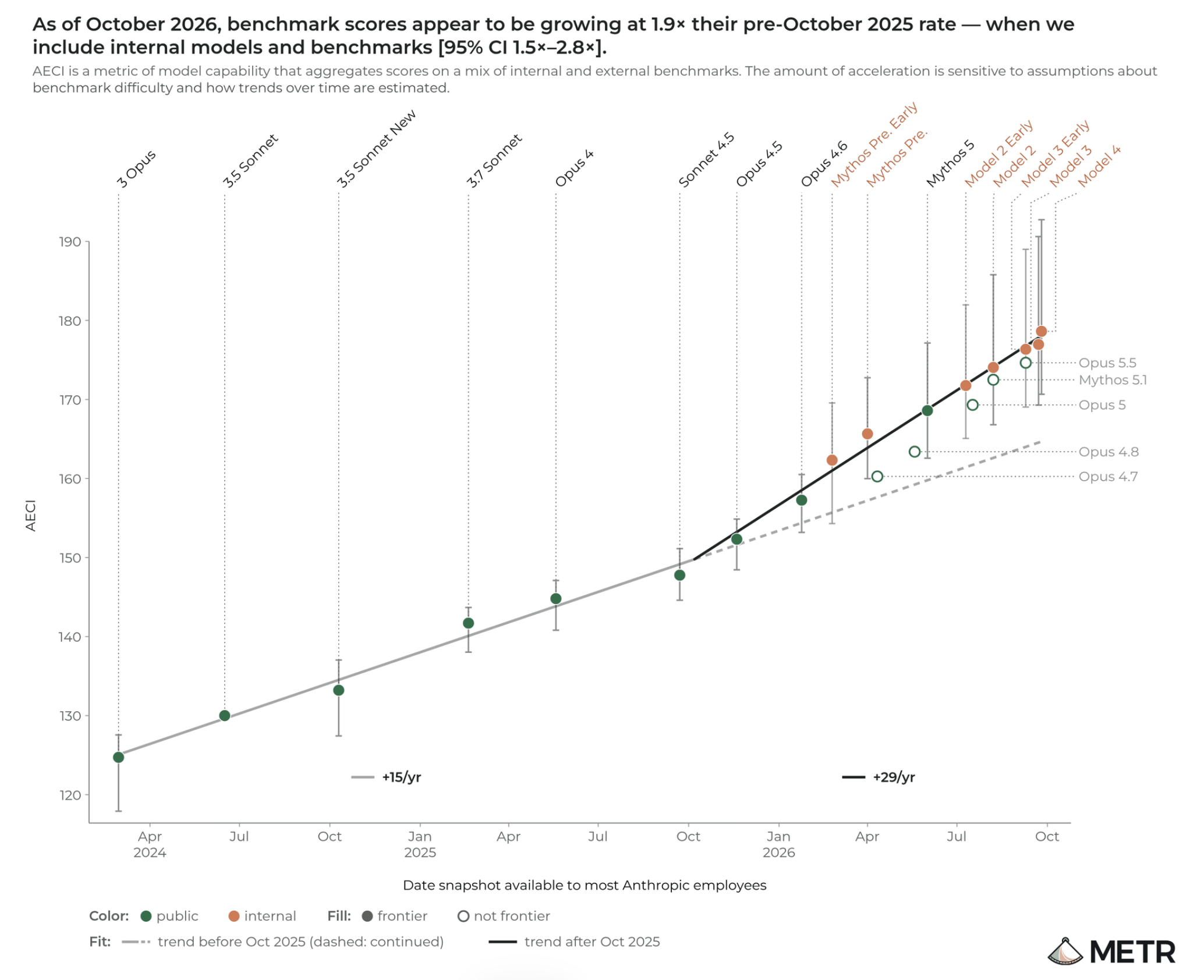
- There is evidence that this is speeding up progress. METR had unprecedented access to Anthropic’s inner R&D work and they estimate the benchmark scores have been improving at roughly 1.9x their previous rate with AI-assisted R&D likely explaining most of the current acceleration. They also found no evidence of significant bottlenecks that would prevent further progress over the next 12 months.
If you think things are moving fast in AI now, they are probably the slowest they’ll ever be.